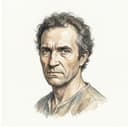
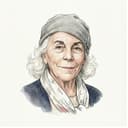
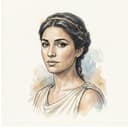
Frida Kahlo & Marie Curie
Two women who shattered barriers in their fields while battling personal demons
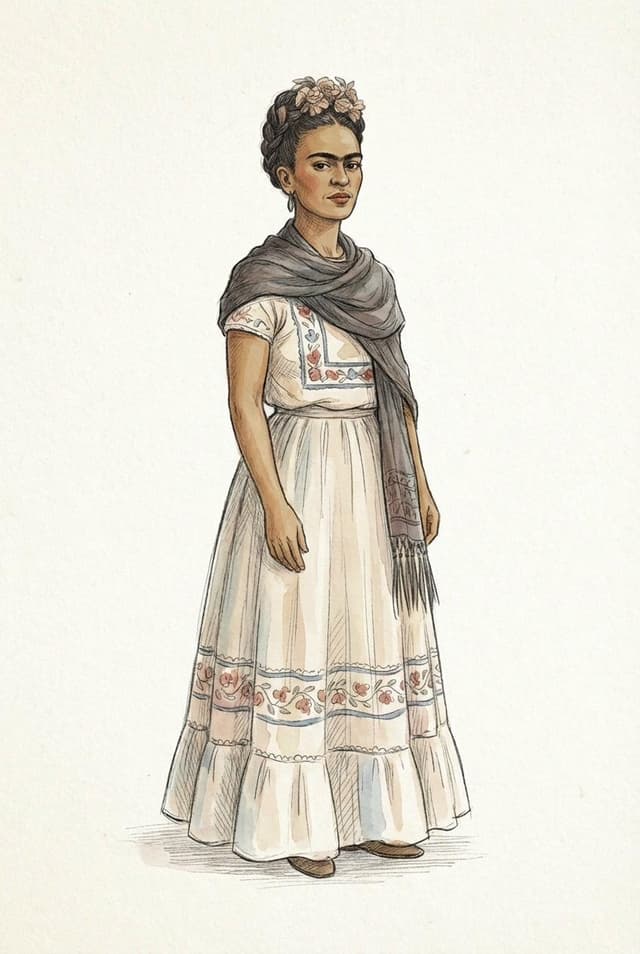
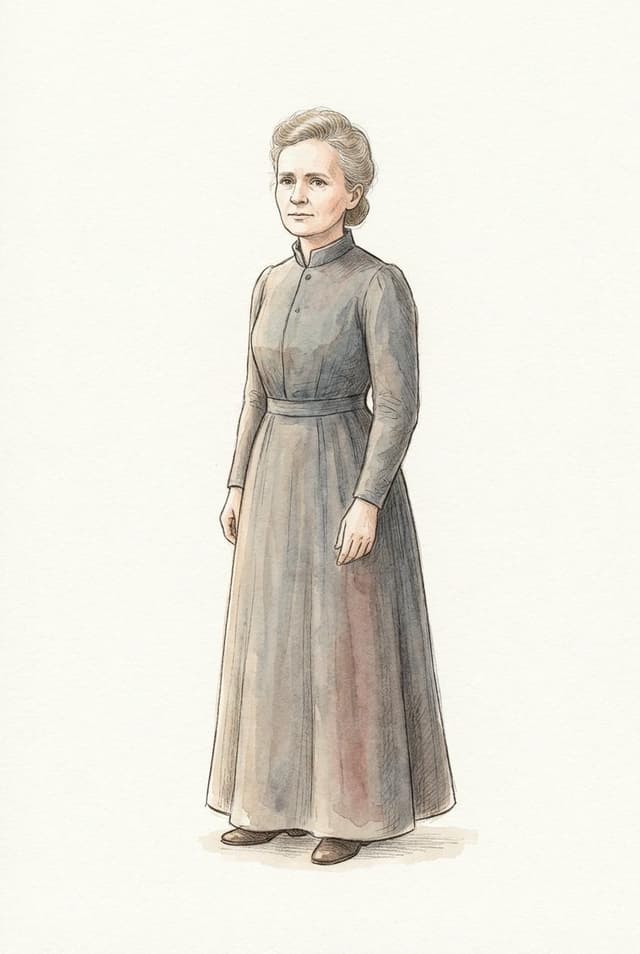
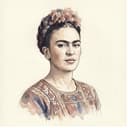
Frida Kahlo
1907–1954 · Mexican
Mexican artist whose vibrant self-portraits explored identity, pain, and the human body. Her work became a symbol of female strength and Mexican cultural pride.
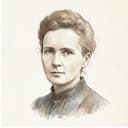
Marie Curie
1867–1934 · Polish-French
Pioneering physicist and chemist, first woman to win a Nobel Prize and only person to win Nobels in two different sciences. Discovered polonium and radium.
Their Lifetimes
-27 years apart Marie Curie
 Frida Kahlo
Unexpected Parallels
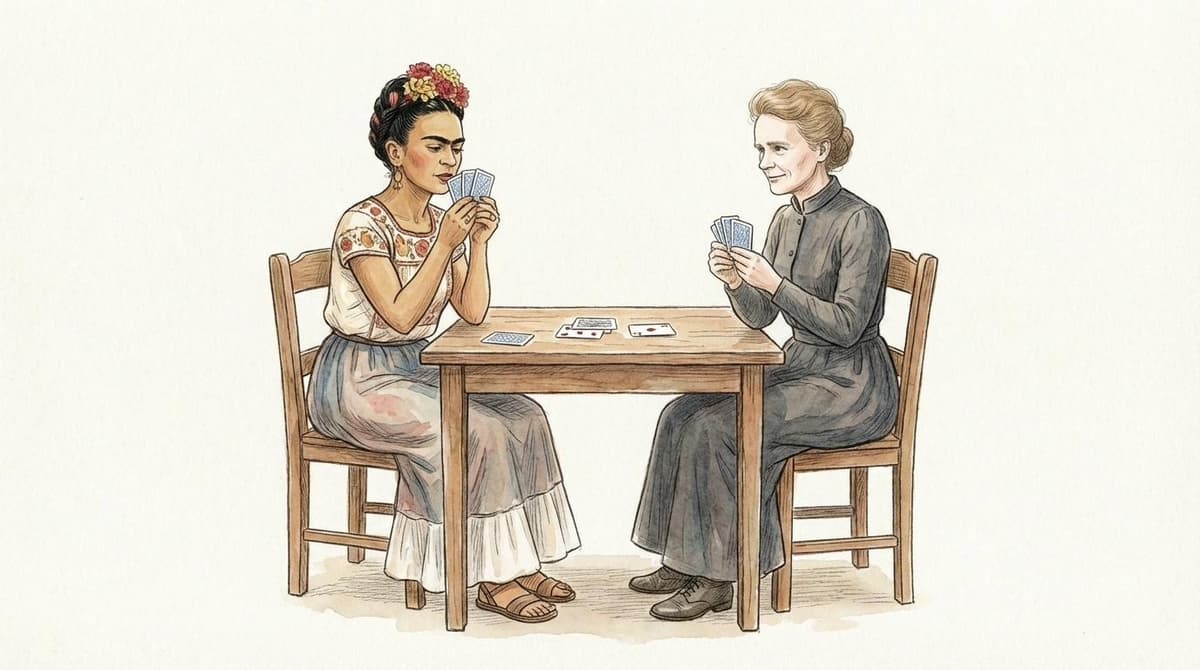
An artist and a scientist, both women, both immigrants, both pioneers who refused to let society's expectations limit their ambitions. Frida transformed physical agony into visual art; Marie transformed invisible rays into scientific understanding. Both worked in fields dominated by men—the Mexican art world centered on Rivera and the muralists, the scientific world on male professors who initially refused Marie a proper laboratory. Both paid physical prices for their work: Frida's surgeries, Marie's radiation poisoning. Both were dismissed during their lifetimes only to be recognized as giants later. And both became symbols—Frida of Mexican identity and feminist strength, Marie of female achievement in science—that transcended their individual accomplishments.
About Frida Kahlo
Frida Kahlo was born in Coyoacán, Mexico, and contracted polio at age six, leaving one leg thinner than the other. At eighteen, a bus accident impaled her with a steel handrail, shattering her spine and pelvis. She would undergo over thirty surgeries in her lifetime and live with chronic pain. During her recovery, she began to paint.
Her self-portraits—unflinching examinations of her body, her indigenous heritage, and her stormy marriage to muralist Diego Rivera—made her an icon. She painted in vibrant colours drawn from Mexican folk art, incorporating symbolism from Aztec mythology and Catholic iconography. Her work explored themes considered taboo: miscarriage, disability, female sexuality. She was politically active, hosting Trotsky during his Mexican exile. Though largely overlooked during her lifetime in favor of her more famous husband, Frida is now recognized as one of the 20th century's most important artists, her unibrow and flower crowns as famous as her paintings.
About Marie Curie
Maria Sklodowska was born in Warsaw when Poland was under Russian occupation. Women were barred from higher education, so she worked as a governess while studying in secret. At 24, she moved to Paris, enrolled at the Sorbonne, and began the research that would change science forever.
With her husband Pierre, she discovered two new elements—polonium (named for her homeland) and radium. Their work on radioactivity earned them the Nobel Prize in Physics in 1903. After Pierre's death in a street accident, Marie continued alone, winning a second Nobel in Chemistry in 1911. She faced vicious xenophobic and sexist attacks from the French press, yet persevered. During World War I, she developed mobile X-ray units, driving them to the front lines herself. She died of aplastic anemia caused by radiation exposure—she had carried test tubes of radioactive isotopes in her pockets and stored them in her desk drawer. Her papers remain too radioactive to handle without protection.
Shared Experiences
🤝- ✦ Immigrated or worked in foreign countries where they faced cultural prejudice alongside gender discrimination
- ✦ Achieved breakthroughs in fields completely dominated by men, forcing doors open for future generations
- ✦ Suffered physical ailments directly connected to their work—Frida's painted pain, Marie's radiation exposure
- ✦ Were overshadowed by husbands during their lifetimes only to surpass them in historical recognition
- ✦ Became symbols of female achievement that transcend their specific fields
Worlds Apart
Frida's WorldMarie's World- ✦ Expressed inner life through visual art
- ✦ Embraced Mexican folk traditions
- ✦ Work was deeply personal and autobiographical
- ✦ Used pain as subject matter
- ✦ Recognition came posthumously
- ✦ Pursued objective scientific truth
- ✦ Adopted French rationalist traditions
- ✦ Work was impersonal and replicable
- ✦ Pain was an obstacle to overcome
- ✦ Recognition came in her lifetime (Nobel Prizes)
The Conversation