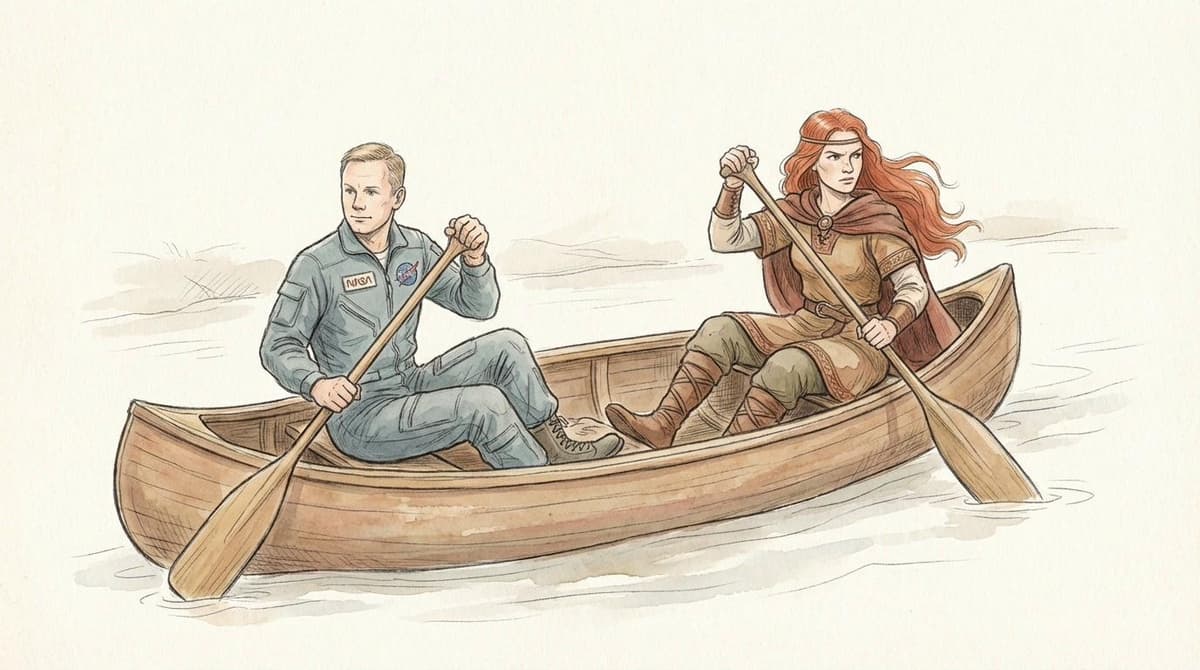
Neil Armstrong & Boudicca
An astronaut and a warrior queen discuss what it means to venture beyond all maps
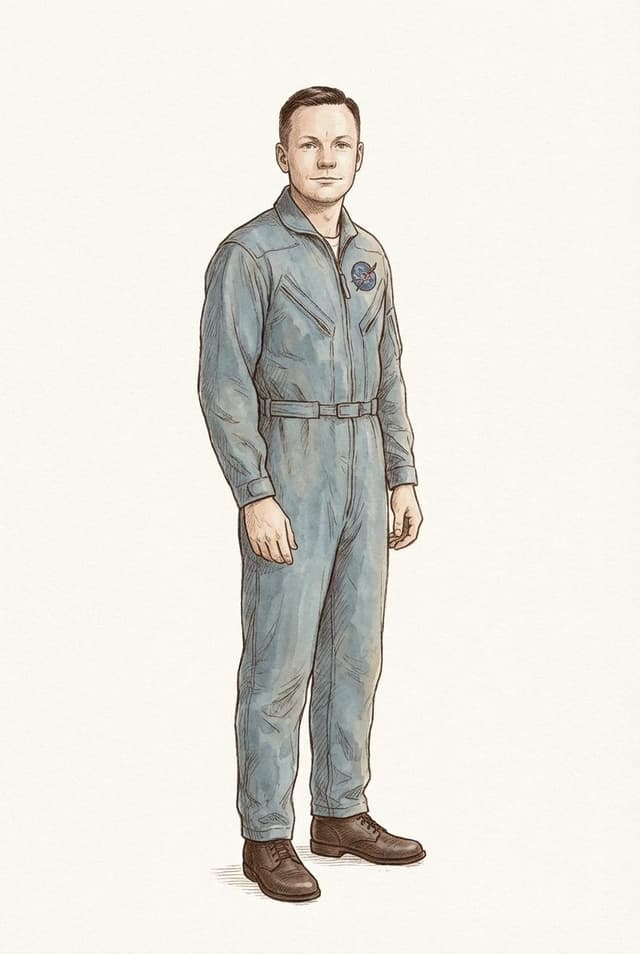

Neil Armstrong
1930–2012 · American
First human to walk on the Moon. His "one small step" in 1969 represented the culmination of humanity's ancient dream of reaching another world.
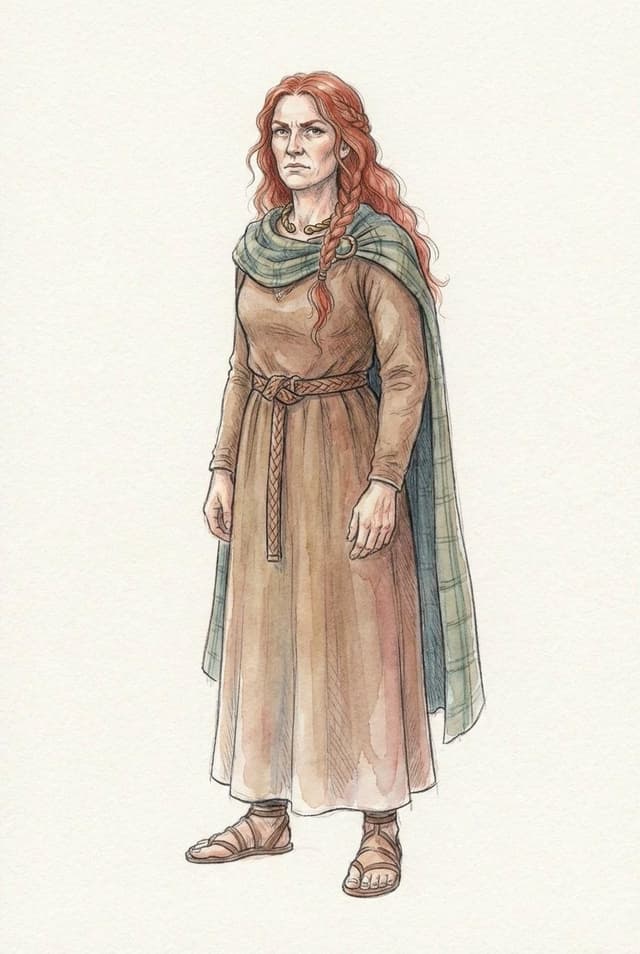
Boudicca
c. 30–61 AD · British
Queen of the Iceni tribe who led a massive uprising against Roman occupation. Her rebellion nearly drove Rome from Britain before its tragic end.
Their Lifetimes
1869 years apart Boudicca
 Neil Armstrong
Unexpected Parallels
An astronaut who ventured to another world and a queen who ventured against an empire: both stepped into the unknown, knowing they might never return. Armstrong's frontier was space itself, the void between worlds where no human had survived. Boudicca's was rebellion against Rome, the mightiest empire the world had known. Both left behind the safety of the familiar—Armstrong his blue Earth, Boudicca her defeated peace. Both became symbols of humanity's refusal to accept limits: Armstrong proving we could reach the stars, Boudicca proving that even the mightiest conquerors could be challenged. And both remained humble about their roles—Armstrong crediting the thousands who built Apollo, Boudicca fighting for her people rather than personal glory.
About Neil Armstrong
Neil Armstrong fell in love with aviation at age two when his father took him to an air race. He earned his pilot's license at 16, before he could drive. As a Navy pilot, he flew 78 combat missions in Korea. As a test pilot, he flew the X-15 rocket plane to the edge of space. Nothing quite prepared him for July 20, 1969.
Commanding Apollo 11, Armstrong manually piloted the lunar module Eagle to a safe landing with only seconds of fuel remaining. His words upon stepping onto the lunar surface—"That's one small step for man, one giant leap for mankind"—became among the most famous ever spoken. Yet Armstrong never sought fame. After Apollo, he taught engineering, served on corporate boards, and largely avoided the spotlight. He rarely gave interviews, never capitalized on his celebrity, and seemed genuinely puzzled by the veneration. He saw himself as a representative of the 400,000 people who built Apollo, not a solo hero. He died in 2012, still modest about his giant leap.
About Boudicca
Boudicca was queen of the Iceni, a Celtic tribe in what is now East Anglia. When her husband Prasutagus died, the Romans ignored his will leaving the kingdom jointly to his daughters and Emperor Nero. Instead, they annexed the territory, flogged Boudicca, and assaulted her daughters. They underestimated what a wronged queen could do.
In 60 or 61 AD, Boudicca led the Iceni and allied tribes in a massive revolt. They burned Camulodunum (Colchester), Londinium (London), and Verulamium (St Albans) to the ground. Roman sources claim 70,000-80,000 died. For a moment, it seemed Britain might throw off Roman rule entirely. But the Roman governor Suetonius regrouped, choosing favorable ground for a final battle. Despite vastly outnumbering the Romans, the Britons were defeated. Boudicca died shortly after—by her own hand, according to Tacitus. Her rebellion failed, but her refusal to accept subjugation made her a symbol of resistance that endures nearly two millennia later.
Shared Experiences
🤝- ✦ Ventured into unknown territory where survival was not guaranteed
- ✦ Became symbols of human courage and the refusal to accept imposed limits
- ✦ Led others into danger, bearing the weight of responsibility for their lives
- ✦ Remained humble despite their legendary status, seeing themselves as representatives rather than solo heroes
- ✦ Faced moments where failure meant death—and pressed forward anyway
Worlds Apart
Neil's WorldBoudicca's World- ✦ Hostile environment: vacuum of space
- ✦ Relied on thousands of engineers
- ✦ Backed by world's wealthiest nation
- ✦ Victory meant peaceful exploration
- ✦ Returned home to fame and safety
- ✦ Hostile environment: Roman legions
- ✦ Relied on tribal warriors
- ✦ Opposed world's mightiest empire
- ✦ Victory meant freedom from occupation
- ✦ Ended in death and defeat
The Conversation