Queen Victoria & Julius Caesar
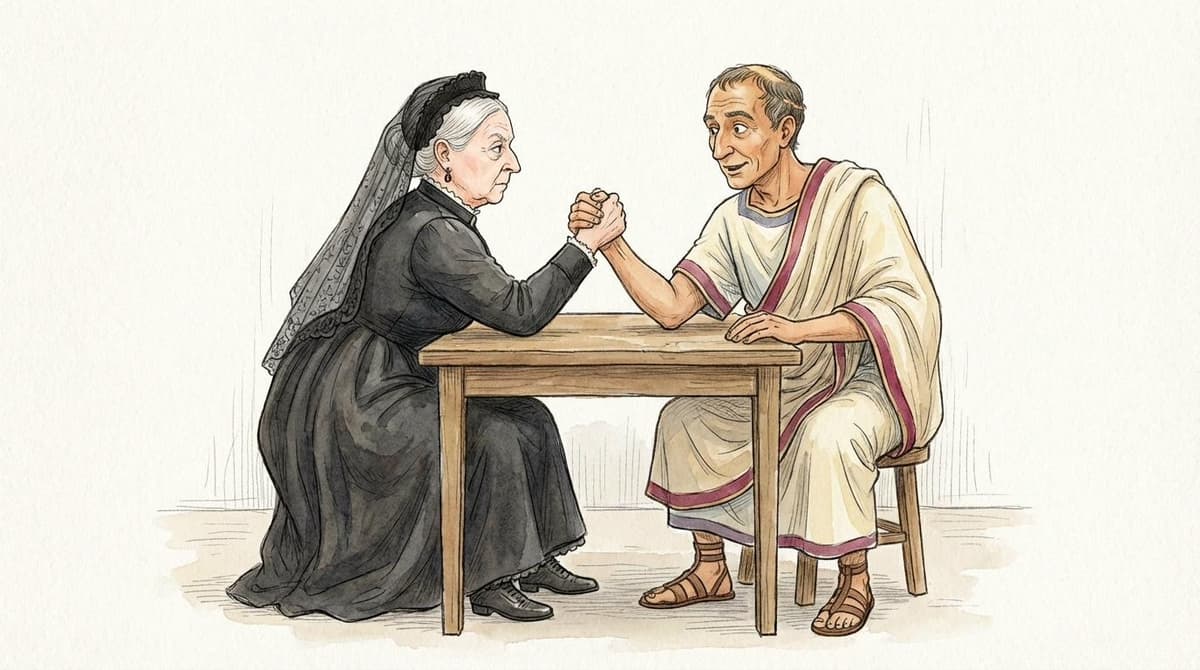
A queen who never ruled alone and a dictator who ruled too absolutely discuss power
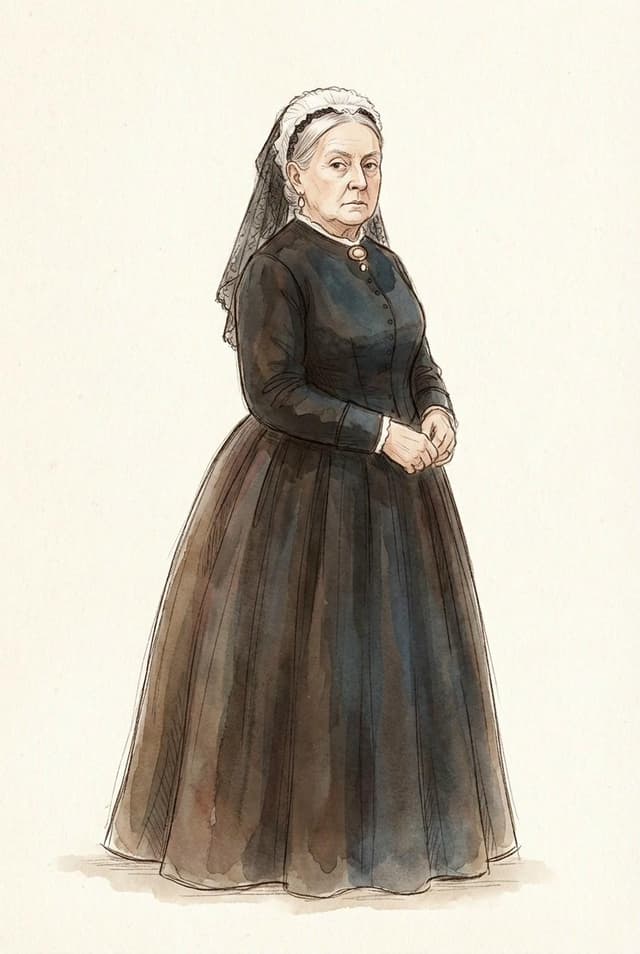
Queen Victoria
1819–1901 · British
Queen of the United Kingdom for 63 years, presiding over the vast British Empire at its height. Her name defined an era of industrial progress and imperial expansion.
Julius Caesar
100 BC–44 BC · Roman
Roman general and statesman who conquered Gaul, crossed the Rubicon, and transformed Rome from republic to empire. His name became synonymous with power itself.
Their Lifetimes
1863 years apart Julius Caesar
 Queen Victoria
Unexpected Parallels
A constitutional queen and an absolute dictator: two models of empire, two relationships with power. Victoria reigned but did not rule, her power constrained by parliament, her influence exercised through personality and moral example. Caesar ruled absolutely, reshaping Rome by force of will, answering to no one—until the daggers found him. Yet both gave their names to ages and empires. Both understood that power requires legitimacy: Victoria's from tradition and bloodline, Caesar's from military victory and popular support. Both expanded their realms vastly—Victoria's empire spanning the globe, Caesar's conquests doubling Roman territory. And both faced the essential question of empire: is it possible to hold such power without being destroyed by it?
About Queen Victoria
Victoria became queen at eighteen when her uncle William IV died without legitimate heirs. She was small, stubborn, and initially unprepared. Over six decades, she would become the embodiment of British identity, her name synonymous with the era itself: the Victorian Age.
She married Prince Albert of Saxe-Coburg and Gotha, and their passionate partnership—both romantic and intellectual—produced nine children whose descendants would populate the royal houses of Europe. Albert's death in 1861 devastated her; she wore black for the remaining forty years of her life. Yet she continued to reign, becoming Empress of India in 1876 and presiding over an empire on which the sun never set. Her influence was paradoxical: she was a constitutional monarch with limited power, yet her personality shaped British culture, morality, and self-image. She died in 1901, having reigned longer than any British monarch before her.
About Julius Caesar
Gaius Julius Caesar was born into an old patrician family that had fallen on hard times. Ambitious from youth, he climbed Rome's political ladder while building military reputation in Spain and cultivating popular support against the aristocratic Senate. His conquest of Gaul—modern France—over eight years made him wealthy, famous, and dangerously powerful.
When the Senate ordered him to disband his army, he instead crossed the Rubicon River, sparking civil war. He defeated his rivals, pursued Pompey to Egypt (where he allied with Cleopatra), and returned to Rome as dictator. His reforms were sweeping: the Julian calendar, land redistribution, citizenship expansion, public works. But his accumulation of power alarmed republicans. On March 15, 44 BC, a group of senators assassinated him on the floor of the Senate. His death sparked another civil war, ending the Republic he had claimed to defend. His adopted heir Octavian would become Augustus, first Emperor of Rome.
Shared Experiences
🤝- ✦ Gave their names to entire eras—Victorian Age, the Caesars
- ✦ Oversaw massive imperial expansion that reshaped the world
- ✦ Navigated complex relationships with governing bodies—Parliament, the Senate
- ✦ Faced the question of succession and struggled to ensure stable transitions
- ✦ Became symbols of their nations that outlasted their actual rule
Worlds Apart
Queen's WorldJulius's World- ✦ Constitutional limits on power
- ✦ Ruled through influence, not command
- ✦ Power came from bloodline
- ✦ Died peacefully after long reign
- ✦ Parliament made the laws
- ✦ Seized absolute power
- ✦ Ruled through military force
- ✦ Power came from conquest
- ✦ Assassinated at height of power
- ✦ Made himself the law
The Conversation